I like to understand how things work and use that to build cool things. Sometimes, that means treehouses for my daughters. Sometimes, that means new AI models.
In modern AI (over the past ~10 years), I’ve mostly focused on four things: reliability, world models, human-AI augmentation and agents. Given the nature of my work (e.g. adversarial market-making at $100B/yr scale at Opendoor), I couldn’t publish most of it. It’s been fun publishing again as an indie researcher over the past several months — 4 published, 3 under review, 1 accepted (TMLR).
World Models
Adversarial Market-Making
Basic Question: What do world models buy that predictions can’t?
Status: Deployed at Opendoor (NASDAQ: OPEN) — $100B/yr scale
Link: <proprietary>
How do you make $100B in offers on O(million) homes in <1 minute? Naively, it’s just prediction, right? Estimate the home’s value, then offer that. But, a binding cash offer isn’t a point estimate, it’s a standing option the seller exercises against you. Zillow launched a prediction engine, lost O($1B) at steady-state and exited iBuying.
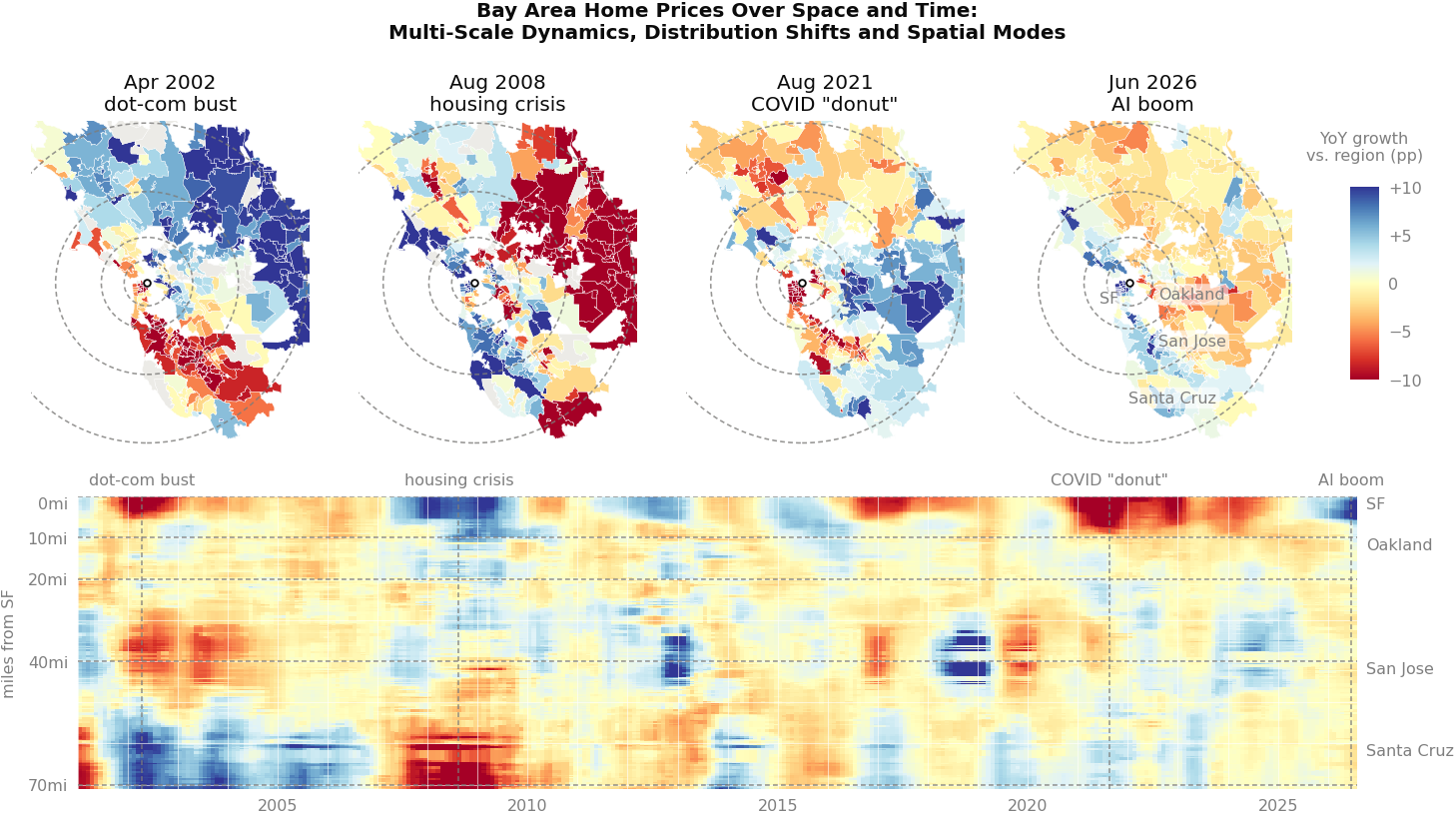
We built an adversary-robust world model with physics-informed time dynamics, causal world model over space and multi-modal active learning, which enabled counter-factual reasoning under risk, macro and operating decisions. It beat Zillow’s AVM and 10+ SOTA models by ≥10% MAPE on a 30K holdout and helped lead to Opendoor’s first post-COVID profitable quarter in Q2 2025.
Upshot: Market-making at $100B/yr scale requires simulation-capable world models.
Agents
Catastrophic Remembering in Agentic Coding
Basic Question: Why does CLAUDE.md just keep growing?
Status: Under review (link)
[NOTE: This one went viral: ~100K views in <24h, #2 on alphaXiv, inbound media interest, etc. — I originally worked this out for fun, but I clearly hit a nerve.]
If you add comments encoding instructions’ latent reasoning to agentic prompts, you can cut 99.3% excess instructions and buy back ~23% instruction-following.
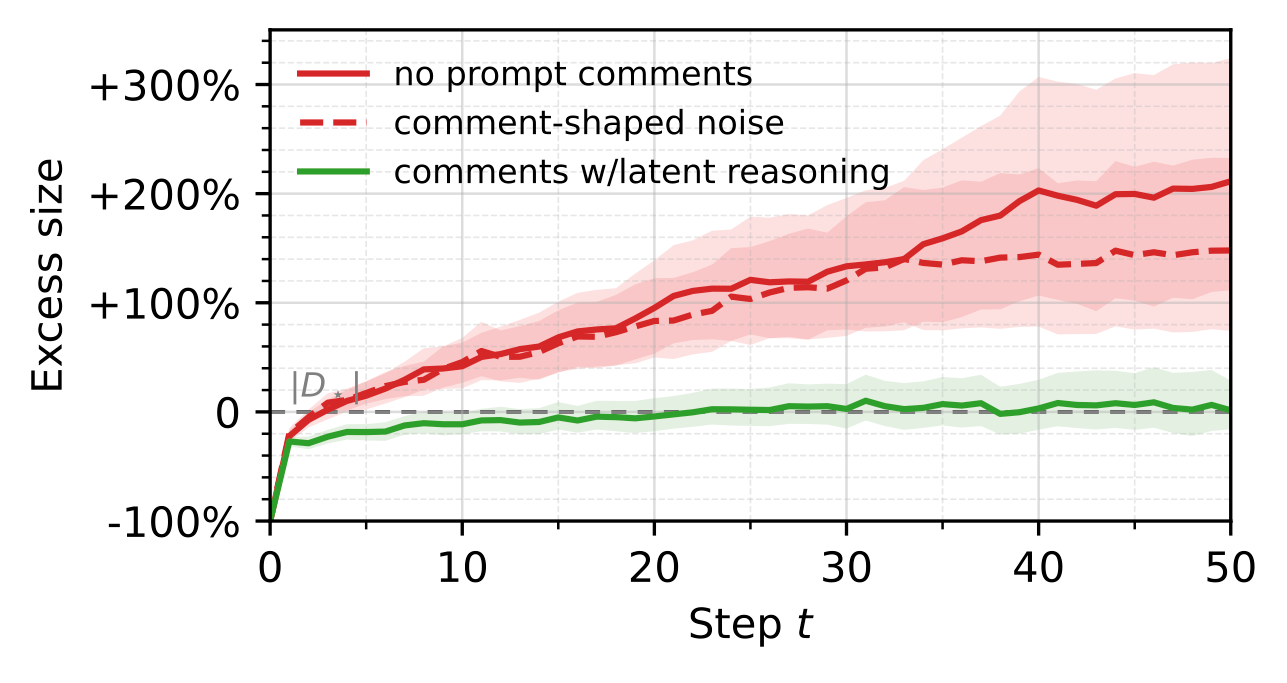
Why? Adding an instruction is always cheap, but once its latent reasoning is gone, deleting instructions without risking a regression requires O(2|D|) counterfactuals. Successive edits by multiple authors destroy that latent reasoning, so deletion hazard decays with age, additions outrun removals, and instructions grow without bound until agents become non-functional — call it catastrophic remembering.
If you persist that latent reasoning (via prompt comments, say), the unbounded instruction growth goes away. And bonus: it’s well known that instruction-following decays with instruction count, so you get both efficiency and reliability.
Upshot: If English is the new code, it needs comments.
TalentWorks
Basic Question: What if the bottleneck to trustworthy agents isn’t capability but testability?
Status: Operational at TalentWorks (<2019): autonomous, LM-grounded agents in production
Link: <proprietary>
TalentWorks developed and operated autonomous agents at production scale that applied to real jobs for real people — years before “agentic AI” had a name.
Borrowing from stochastic simulation (tl;dr: you can’t check one run for a stochastic system, you have to verify distributional behavior across many counterfactual worlds), we made evaluation a hardened product: a harness that replayed each agent across synthetic job applications and scored its tail reliability, not its median or average. Done right, even primitive (BERT, spaCy, etc.)-based agents worked wonders.
Upshot: An agent is only as trustworthy as its tail.
Reliability
Although LLM capability has demonstrated exponential progress, LLM reliability has been stubbornly intractable. Sometimes, if a problem seems surprisingly hard despite really smart people working on it, it’s because we’re asking the wrong question.
Neural Diversity Regularizes Hallucinations in Language Models
Basic Question: What if LLM hallucinations are caused by noise (not lack of knowledge)?
Status: Accepted, Transactions on Machine Learning Research (2026)
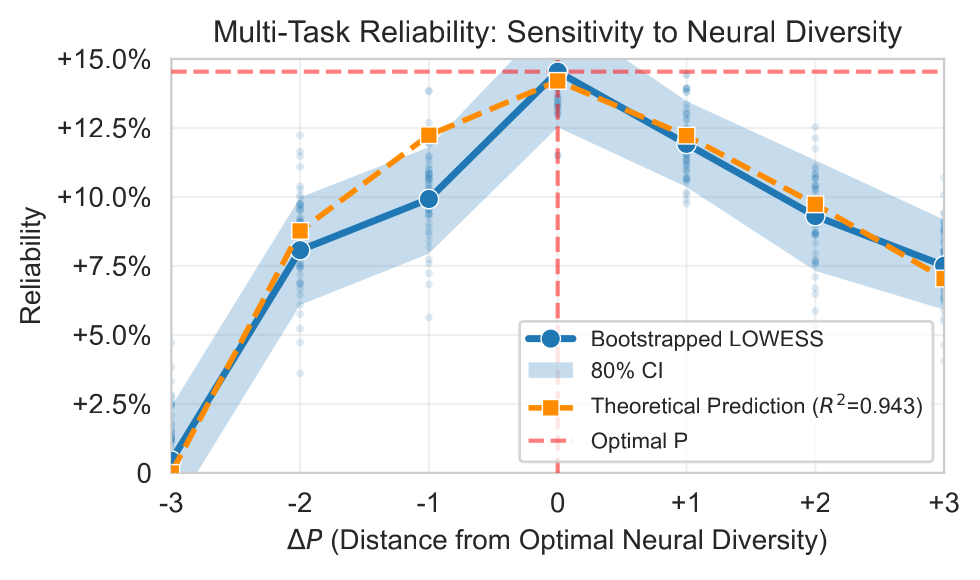
Borrowing from portfolio theory (tl;dr: diversifying risks reduces total risk), we re-interpret a model’s parallel reasoning streams as a portfolio and find them badly under-diversified, meaning their errors line up instead of cancel out. De-correlating them reduces hallucination up to 25.6% and produces the first provable bounds on hallucination in ensembled LMs, predicting 94.3% of the real-world variance we see.
Upshot: Neural diversity is a third axis to improve AI reliability, alongside data & parameters.
Multi-Head Attention is a Multi-Player Game
Basic Question: What’s the price of ignoring intra-model collaboration?
Status: Under review (link)
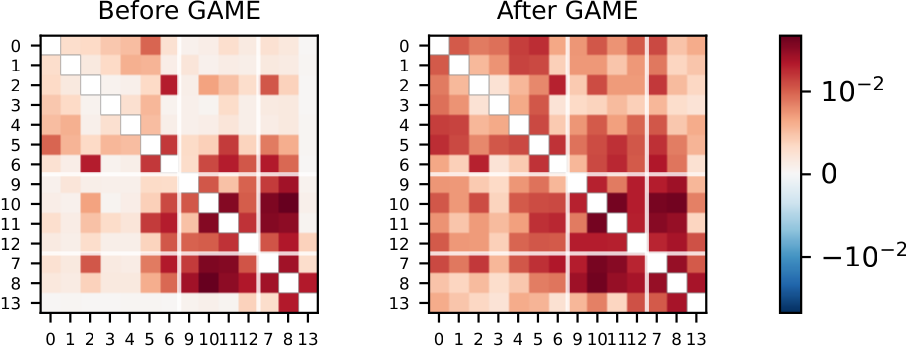
Modern transformers are actually internally multi-agent — attention heads compete and coordinate — yet we train them as if they were monolithic entities.
Borrowing from algorithmic game theory (tl;dr: selfish players can settle into equilibria arbitrarily worse than the global optimum), we show cross-entropy training under SGD induces an implicit game among attention heads whose Nash equilibria have quantifiable properties. We (i) formally prove the price of this anarchy manifests as inefficiency and unreliability and (ii) empirically demonstrate coordinating attention heads improves reliability by up to 18% at constant capability.
Upshot: Attention is all you need, but coordination is what you lack.
Reliability Scales Inversely: Hallucinations Snowball Faster in Bigger Language Models
Basic Question: How does reliability scale?
Status: Under review (link)
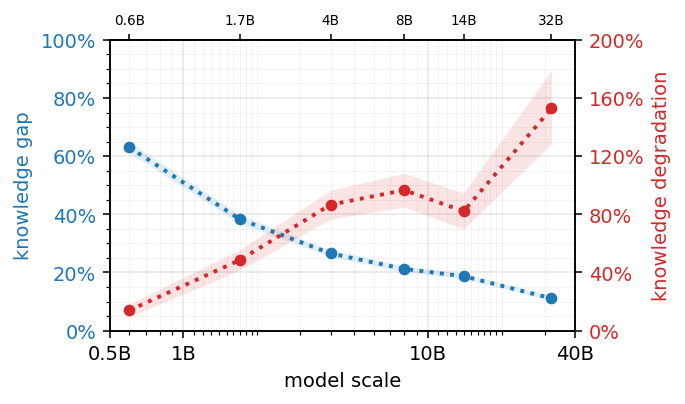
We keep assuming bigger models will be trustworthier. This paper shows the opposite: reliability scales inversely.
As models get bigger, they get more fragile — in long-form responses, their answers start truer but degrade faster. In particular, we show as models scale, the knowledge gap (capability) improves by 2-7x, yet knowledge degradation (reliability) worsens by 3–39x. The culprit is a hidden, auto-regressive risk regime: the model blurts out one low-odds word, treats its guess as settled fact, and builds on it. Up to 74% of hallucinations are attributable to unreliability in modern language models.
Upshot: Bigger models are more fragile.
Human-AI Augmentation
Cost Centers → Capabilities
Basic Question: What if your compliance cost is actually your training signal?
Status: Deployed at Opendoor (NASDAQ: OPEN) — regulated, $15B/yr scale
Link: <proprietary>
Compliance required every offer to be human-underwritten — a 100-person team that looks like pure cost. But, when you think about it, the disagreement most teams would throw away as “compliance” is actually an incredibly powerful signal.
Borrowing from active learning, we made the UX the instrument: triage by uncertainty so humans take the hard, high-stakes, adversely-selected cases, and capture every override as a labeled preference delta — without anchoring them. Overrides become labels, confidence rises, escalation and cost/offer fall, and the audit trail makes compliance stronger. A single budget can buy both training signal and regulatory defensibility at once.
Upshot: Augmentation » automation.